WordPress or Next.js for SMBs?
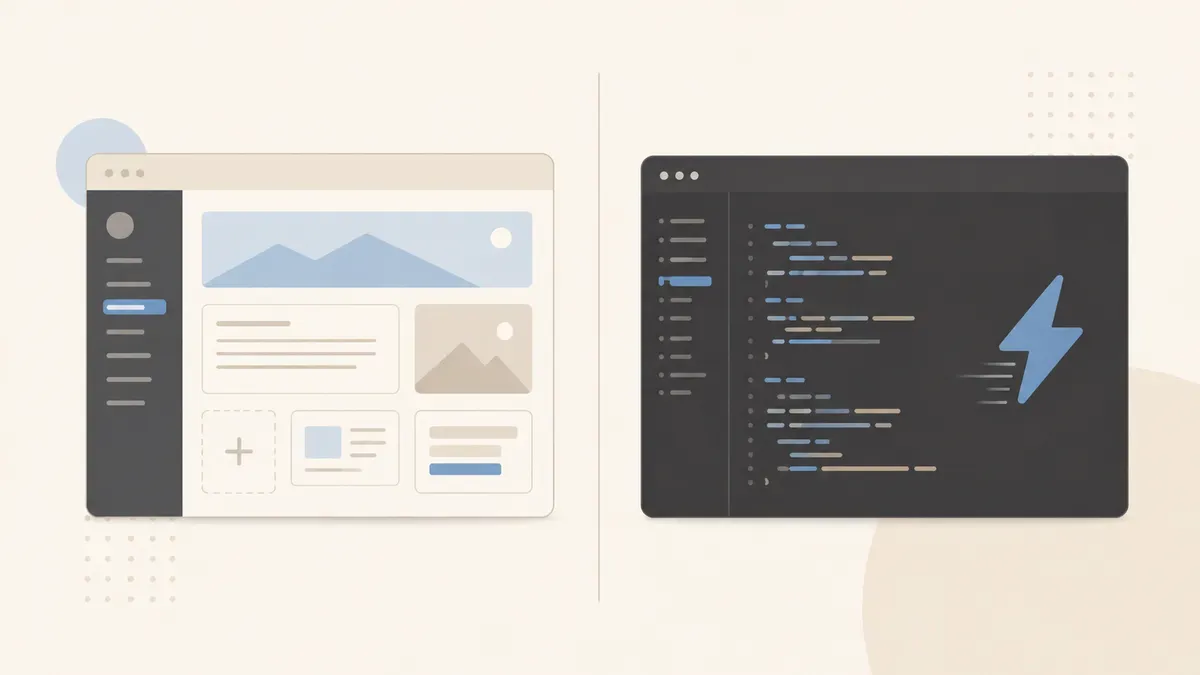
Both technologies have their place. We compare them objectively — looking at maintainability, performance, cost and scalability.
WordPress or Next.js for SMBs?
This is the question that kicks off half of all web development debates. WordPress powers around 40% of the web. Next.js (and similar modern frameworks) are eating into that share fast. So which one should your small or medium-sized business choose?
The Case for WordPress
What it does well:
- Content management: WordPress's editor is mature and intuitive. Non-technical team members can update pages, publish blog posts, and manage media without touching code
- Plugin ecosystem: There's a plugin for virtually everything – SEO, forms, e-commerce, bookings, memberships, multilingual content. Many are free or inexpensive
- Developer availability: Finding a WordPress developer is easy. There are millions of them worldwide, which keeps costs competitive
- Lower upfront cost: A solid WordPress site can be launched for €3,000-€8,000, often less
Where it struggles:
- Performance battles: Out of the box, WordPress is not fast. Achieving good Core Web Vitals scores requires careful optimisation, caching plugins, CDN configuration, and ongoing vigilance. Every new plugin adds weight
- Security target: WordPress's popularity makes it the number-one target for hackers. Brute-force attacks, SQL injection, and plugin vulnerabilities are constant threats. You need regular updates, security plugins, and monitoring
- Plugin conflicts: The more plugins you add, the more likely they are to conflict with each other or break during updates. We've seen sites go down because a single plugin update clashed with the theme
- Technical debt: WordPress sites tend to accumulate cruft over time – unused plugins, bloated databases, legacy code in themes. After 2-3 years, many need a significant overhaul
The Case for Modern Frameworks (Next.js, Astro, Nuxt)
What they do well:
- Built-in performance: Static generation and server-side rendering deliver blazing-fast page loads by default. You don't fight for a good Lighthouse score – you start there
- Security: No database to hack, no admin panel to brute-force. The attack surface is much smaller
- Flexibility: You can build exactly what you need without compromise. Custom animations, unique layouts, complex data flows – nothing is off the table
- Scalability: JAMstack architecture handles traffic spikes effortlessly. Your site won't crash because a blog post went viral
Where they struggle:
- Higher upfront cost: Custom-built sites typically start at €10,000+ because they require specialised development
- Smaller talent pool: Finding experienced Next.js or Astro developers is harder than finding WordPress developers, especially outside major tech hubs
- Content management: You'll need a headless CMS (Sanity, Contentful, Strapi, Storyblok) for non-technical content editing. This adds another tool to your stack and another monthly cost
5 Real-World Scenarios
- Consulting firm (5-10 pages, blog, contact form): WordPress. It's cost-effective, easy to manage, and the performance requirements are modest
- E-commerce brand (500+ products, custom filtering, personalisation): Next.js with a headless commerce platform. WordPress + WooCommerce will buckle under this kind of complexity
- Local trades business (landing pages, Google Ads, reviews): WordPress. Speed matters for ad conversions, but a well-optimised WordPress site handles this just fine at a lower budget
- SaaS startup (marketing site + documentation + blog): Next.js or Astro. The developer team can maintain it, the performance is exceptional, and it scales without drama
- Full-service SMB (10-30 pages, multilingual, CRM integration, ongoing campaigns): Either – depending on who's managing it. This is exactly where Zenku Complete shines: we choose the right tech stack for your situation and handle everything
3-Year Total Cost Comparison
Let's compare a mid-range website for a typical SMB:
| WordPress | Next.js / Custom | Zenku Complete | |
|---|---|---|---|
| Initial build | €5,000 - €8,000 | €12,000 - €25,000 | €0 (included) |
| Hosting (3 years) | €1,200 - €3,600 | €360 - €1,200 | €0 (included) |
| Maintenance (3 years) | €3,600 - €9,000 | €1,800 - €5,400 | €0 (included) |
| Content updates | €2,000 - €6,000 | €2,000 - €6,000 | €0 (included) |
| 3-year total | €11,800 - €26,600 | €16,160 - €37,600 | €71,640 |
Zenku Complete costs more in raw numbers, but it includes continuous optimisation, analytics, conversion tracking, strategic guidance, and zero surprise bills. For businesses where the website is a core revenue driver, the ROI calculation shifts quickly in favour of a managed solution.
3 Questions to Decide
- Who will manage the site after launch? If the answer is "we don't have anyone," lean toward a managed solution or ensure your contract includes ongoing support
- How important is website speed to your revenue? If you rely on Google Ads, SEO, or e-commerce, every 100ms of load time matters. Modern frameworks have the edge here
- What's your 3-year plan? If you'll need to add features, integrate tools, or expand to new markets, invest in architecture that can grow with you
Not sure which direction is right? Get in touch – we'll give you a straight recommendation, even if it means pointing you somewhere else.